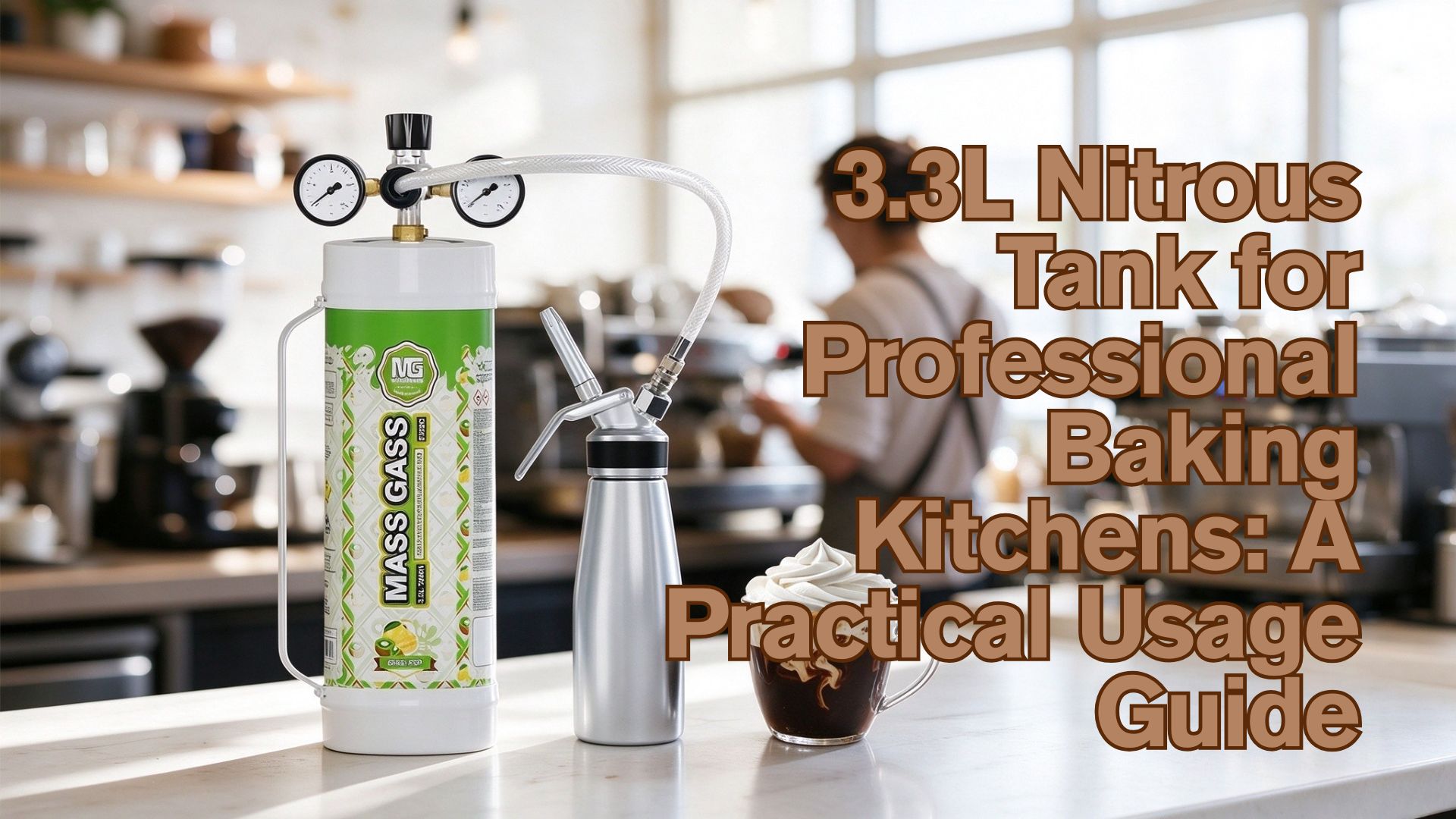
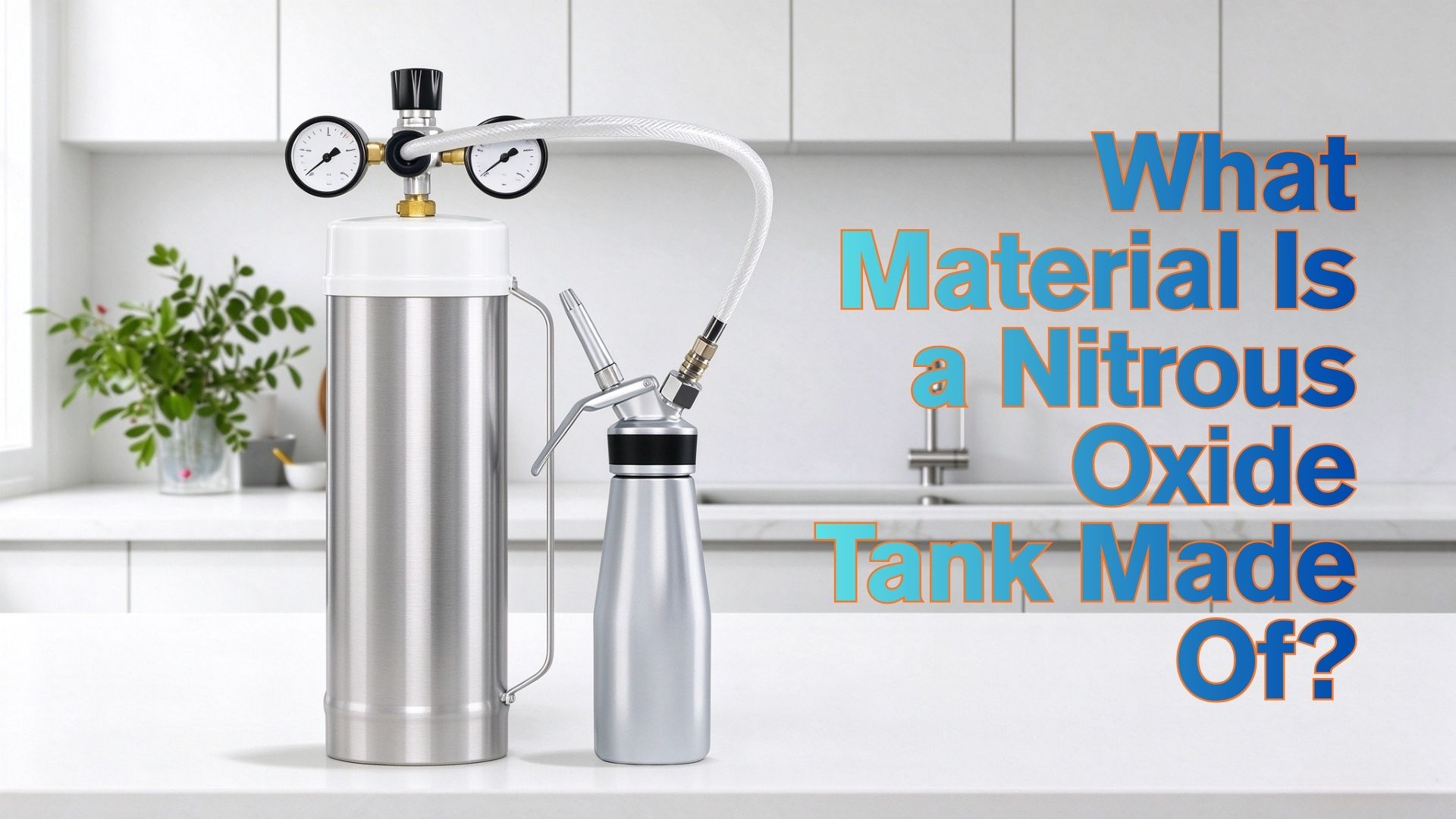
A nitrous oxide tank used in professional kitchens needs to do more than hold gas. It must be durable, reliable, and designed to handle pressure safely, especially in busy bakeries, cafés, and commercial food-service environments. Steel alloy is one material used in pressure cylinder construction because of its mechanical strength and durability.
1.What Material Is a Nitrous Oxide Tank Made Of?
HP345 Steel Alloy Construction
A nitrous oxide tank can be manufactured from different materials, depending on its design and intended application. For this cylinder, the specified material is HP345 steel alloy, subject to confirmation in the manufacturer's technical documentation.
Steel alloy is used in pressure vessel applications because it can provide high mechanical strength and structural stability when properly formulated, processed, and manufactured. The cylinder's ability to withstand pressure depends on more than the material alone. Wall thickness, heat treatment, welding quality, valve design, and manufacturing standards all play important roles.
For commercial kitchens, a properly specified cylinder offers a durable gas storage solution for compatible food-service equipment.
2. Why Choose Steel Alloy for a Nitrous Oxide Tank?
Strength and Structural Stability
Steel alloy is valued for its mechanical strength, making it suitable for appropriately engineered pressure whipped cream canisters. A well-designed cylinder must withstand its specified operating conditions without compromising structural integrity. The actual pressure rating, however, must be established through engineering specifications and applicable testing rather than inferred from the material name alone.
Durability for Daily Use
Professional kitchens can be demanding environments. Equipment may be moved during cleaning, rearranged to accommodate different workflows, or handled repeatedly throughout the day. A properly manufactured steel alloy cylinder can provide a durable exterior for routine commercial use when handled, inspected, and maintained according to the manufacturer's instructions.
Protection Against Corrosion
Steel can corrode when exposed to moisture and unsuitable environmental conditions. Protective surface treatments can help reduce this risk and preserve the cylinder's exterior. For equipment used around food preparation areas, keeping the cylinder clean, dry, and in good condition is also important.
3. Key Safety and Protection Features
Shot-Peened Surface Treatment
Shot peening is a surface treatment that can introduce beneficial compressive residual stresses into suitable metal components. When properly specified and validated, it can improve resistance to certain types of fatigue damage. Its actual benefits depend on the material, component geometry, and treatment process, so it should not be treated as a substitute for pressure vessel design and testing.
Anti-Corrosion Electrostatic Coating
An electrostatically applied coating can help protect the cylinder's exterior against corrosion and surface wear. The coating system should be appropriate for the cylinder's operating environment and maintained according to the manufacturer's recommendations.
In a bakery or café, this type of exterior protection may help the equipment maintain its condition during routine use. However, the coating does not replace proper inspection or safe storage.
Reliable Welding and Sealing Components
Weld quality, valve connections, and compatible sealing components are essential to pressure cylinder integrity. These components must be designed and tested for the intended gas and operating conditions. Properly manufactured connections help reduce the risk of leakage, while regular inspection helps identify damage or deterioration before the equipment returns to service.
No cylinder should be described as completely leakproof without supporting test evidence.

Pressure Regulation and Control
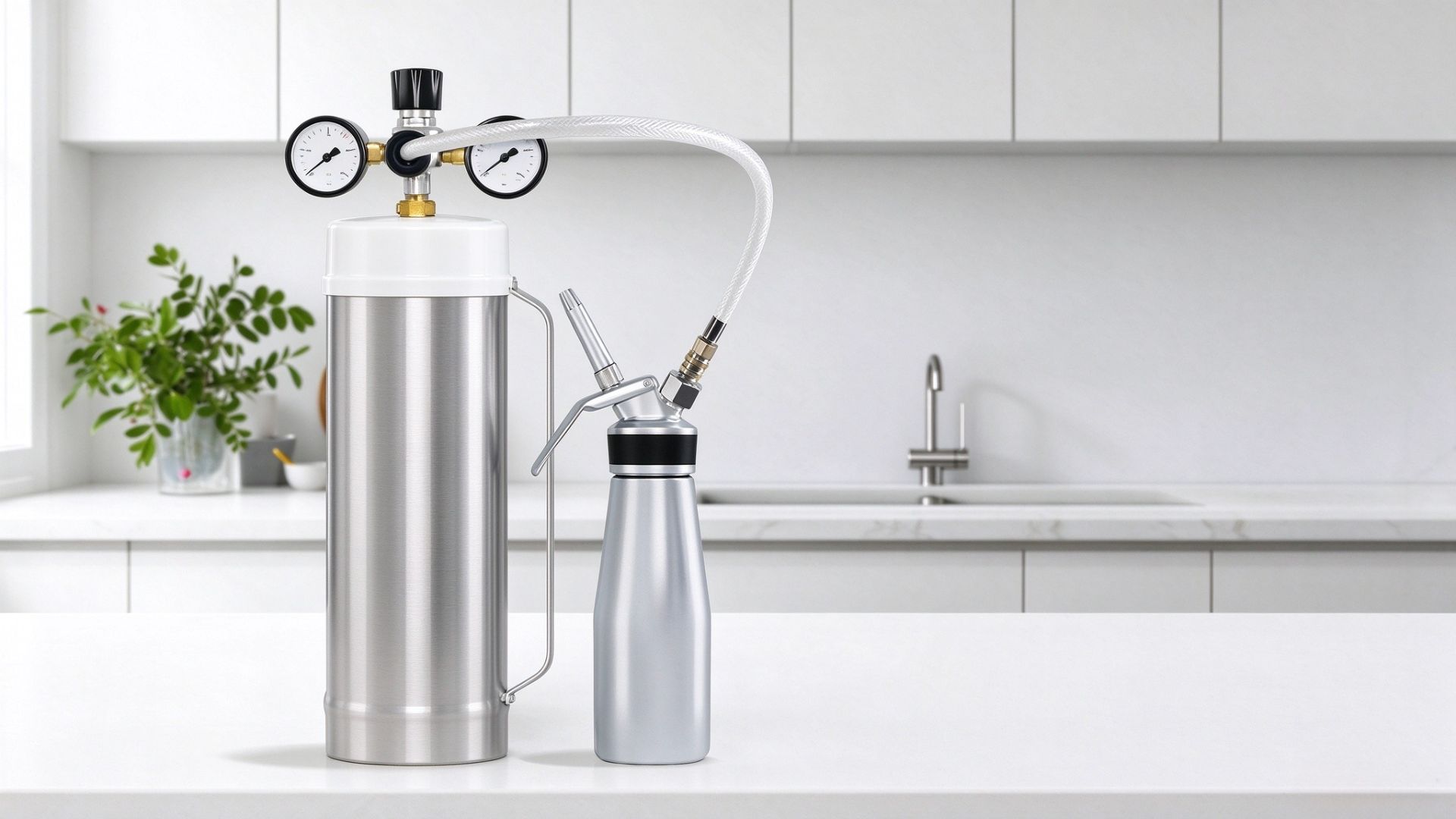
A pressure regulator may be required when the cylinder's outlet pressure is higher than the pressure permitted by the connected equipment. The regulator must be compatible with nitrous oxide, the cylinder valve, and the downstream system.
A dual-stage regulator can reduce pressure in two stages when the system is designed for that arrangement. However, automatic pressure stabilization should only be claimed if the specific regulator has that documented capability. The cylinder, regulator, hoses, and dispensing equipment must all be compatible.
4. What Should Buyers Check Before Choosing a Nitrous Oxide Tank?
Material and Technical Specifications
Confirm the cylinder's material grade, rated working pressure, manufacturing details, and applicable pressure vessel certifications. If the product is specified as HP345 steel alloy, request documentation confirming the material designation and its suitability for the intended application.
Food-Grade Gas and Equipment Compatibility
The gas purity specification and cylinder's suitability for food-service use should be verified separately. A stated gas purity of 99.99% does not, by itself, establish that the cylinder or its internal surfaces are suitable for food-grade applications.
Check that the cylinder is approved for nitrous oxide and that its valve, regulator, hoses, and dispensing equipment meet the manufacturer's requirements. Never connect incompatible components or bypass pressure-control devices.

Testing, Inspection, and Quality Management
Ask the supplier for relevant inspection and pressure-test records, cylinder markings, and applicable safety certifications. ISO 9001 certification indicates a quality management system; it should not be presented as proof that a specific cylinder has passed every required pressure vessel safety test.
Final Thoughts
Steel alloy offers useful mechanical properties for properly engineered nitrous oxide cylinders, while surface protection, reliable connections, and compatible pressure regulation contribute to the overall equipment design. In professional baking kitchens and cafés, the right cylinder can support whipped cream preparation as part of a well-planned workflow. The most important considerations remain verified material specifications, appropriate certifications, equipment compatibility, and safe handling procedures.