
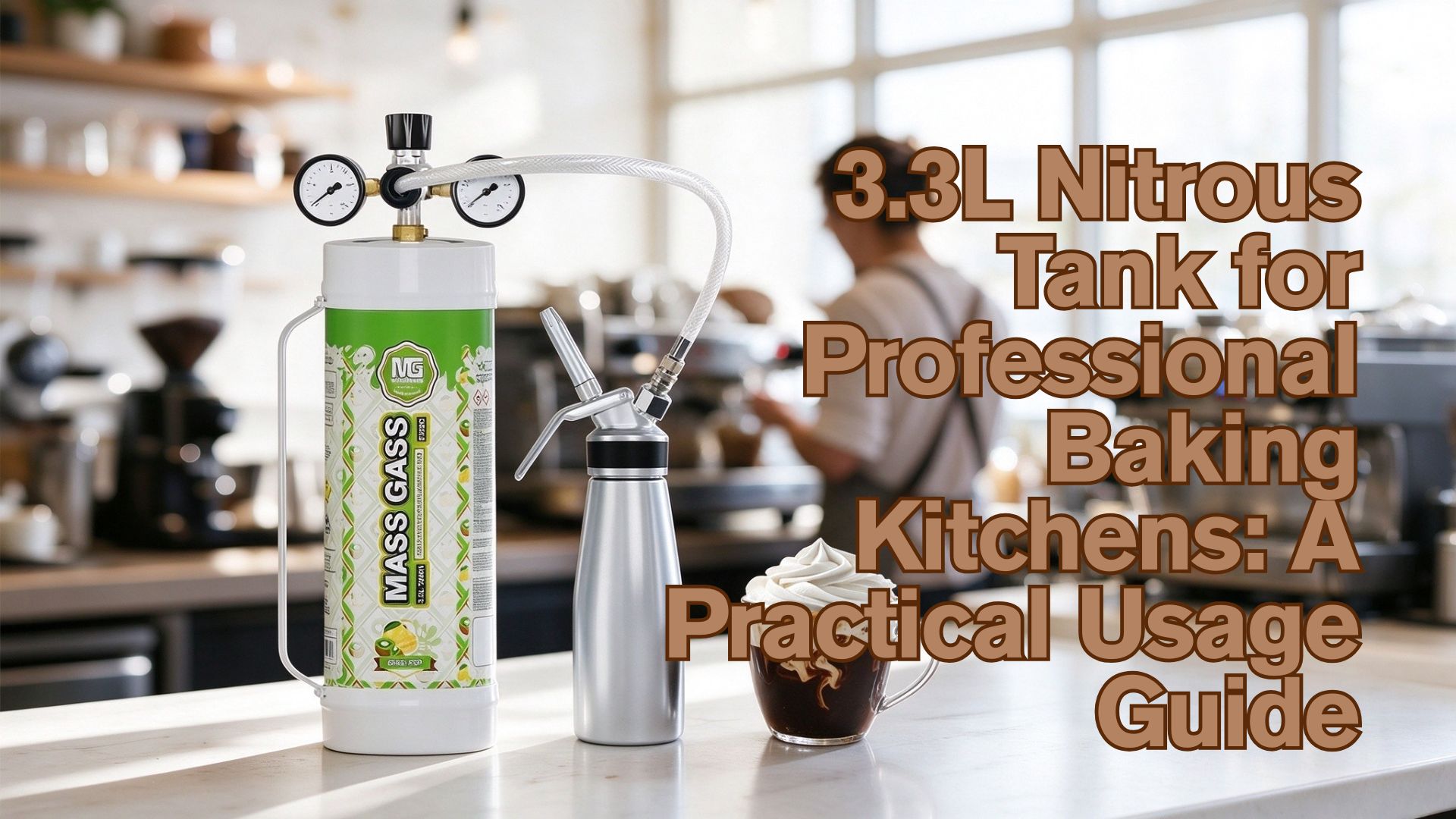
A busy bakery has its own rhythm. One minute, you're finishing a batch of cupcakes; the next, you're preparing cream toppings for a line of coffee and dessert orders. When the kitchen gets busy, having the right equipment can make daily work more manageable.
A 3.3L nitrous tank may be an option for professional baking kitchens that need a suitable gas supply system for whipped cream preparation. Before using one, it's important to understand its intended application, equipment compatibility, safe handling procedures, and storage requirements. Choosing the right setup can help bakeries and cafés maintain a more organized workflow without compromising safety.
1. What Is a 3.3L Nitrous Tank?
Understanding Its Purpose
A 3.3L nitrous tank is designed for compatible gas supply applications in professional kitchens. Depending on the model, the cylinder is made of steel or aluminum and may contain 99.99% food-grade nitrous oxide (N₂O). Before use, check the cylinder's working pressure, valve specifications, and equipment compatibility. A suitable pressure regulator may be required to reduce the gas pressure to the level specified by the connected equipment. Always follow the manufacturer's instructions for safe connection, operation, and storage.

2. Common Uses in Professional Baking Kitchens
Whipped Cream for Cakes and Pastries
Whipped cream is a familiar finishing touch for cakes, cupcakes, pies, and plated desserts. In a professional bakery, consistent texture and reliable preparation matter just as much as appearance. The appropriate food-grade equipment can help staff follow a repeatable workflow while maintaining product quality.
Coffee Drinks and Dessert Toppings
Cafés and dessert kitchens may also use whipped cream to finish iced coffee, hot chocolate, milkshakes, and specialty desserts. Before introducing a larger gas supply system, make sure the equipment is specifically designed for the intended application and can be operated safely by trained staff.
3. Preparing the Equipment Before Use
Check Compatibility First
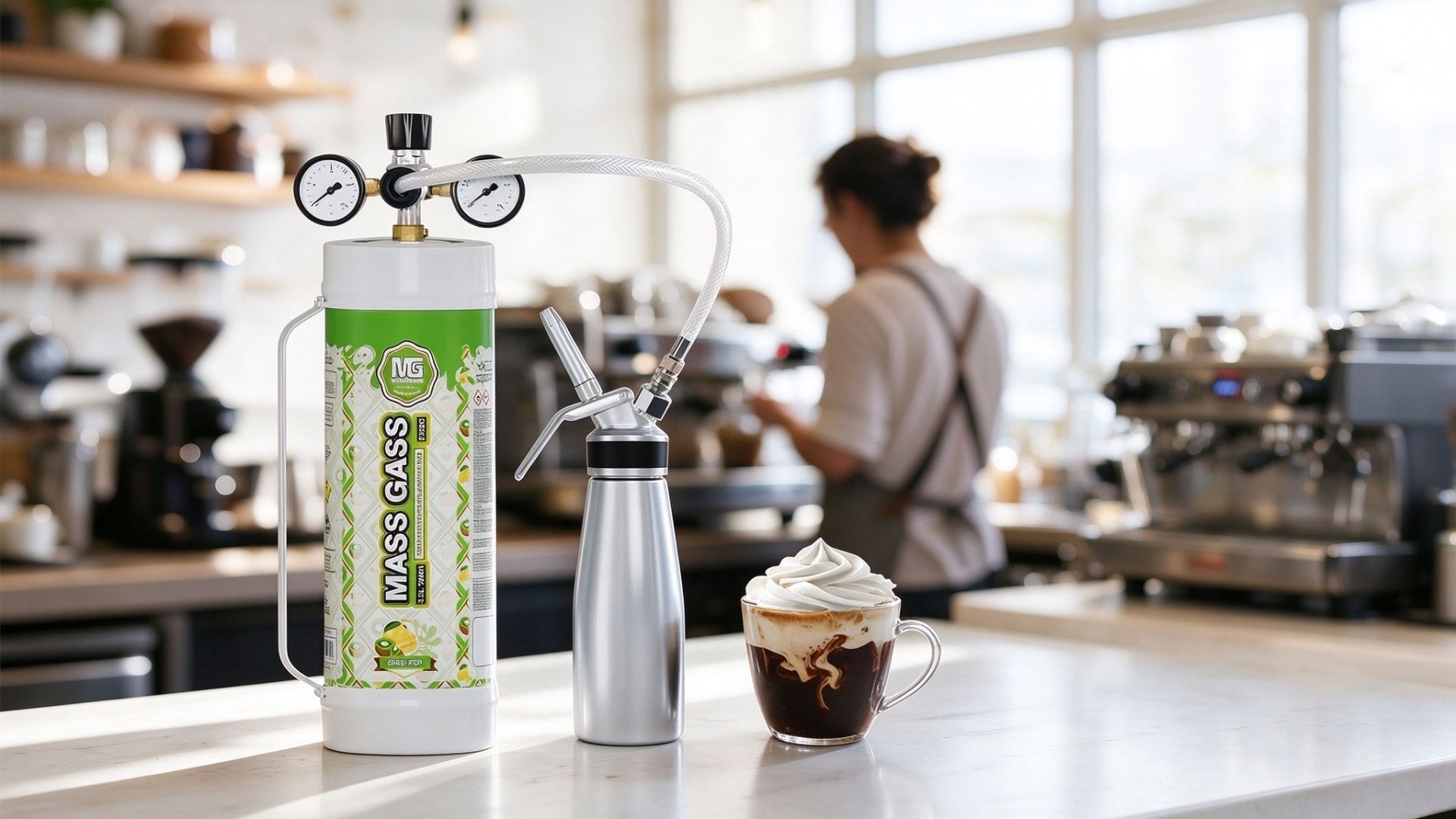
Before setting up a tank, verify that the cylinder, regulator, hoses, connectors, and dispensing equipment are approved for use together. Pressure ratings and connection types must match the manufacturer's specifications. Never rely on improvised adapters or attempt to modify the system to make incompatible parts fit.
Inspect the Tank and Work Area
Check the container for visible damage, corrosion, or other signs of deterioration. Confirm that it is properly secured and that the work area meets the manufacturer's ventilation and storage requirements. If anything appears damaged or unusual, keep the equipment out of service and contact a qualified supplier or technician.
4. Safe Handling in a Commercial Kitchen
Follow the Manufacturer's Instructions
A larger gas container requires more careful handling than an ordinary kitchen tool. Staff should receive appropriate training and follow the approved operating procedure for the exact equipment being used. Do not exceed rated pressure limits, bypass safety devices, or attempt to refill or transfer gas unless the system is specifically designed for that procedure and the work is authorized.
Know When to Stop
If you notice a suspected leak, unusual hissing, damaged fittings, or unexpected pressure behavior, stop using the equipment and follow the manufacturer's emergency instructions. Keep people away from the affected area as appropriate, and contact qualified personnel. Never try to locate a leak with a flame or repair a pressurized connection yourself.

5. Daily Maintenance and Storage
Keep Equipment Clean and Organized
Follow the cleaning instructions for each component, especially any parts that contact food. Keep the tank and its fittings protected from contamination, impact, excessive heat, and unauthorized handling. Do not immerse or clean pressurized equipment unless the manufacturer explicitly permits it.
Store the Tank Correctly
Store the cylinder in the designated area, secured against falling and protected from heat and physical damage. Follow the supplier's requirements for ventilation, valve protection, separation, and storage conditions. Staff should also know how to identify the tank and whom to contact if a problem occurs.
6. Is a 3.3L Nitrous Tank Right for Your Kitchen?
The right equipment depends on more than tank size. Consider how often your kitchen prepares whipped cream, which dispensing systems you already use, whether the product is approved for your application, and what training and storage arrangements are available.
Before making a decision, confirm the cream charger tank's specifications and local requirements with the manufacturer or supplier. A suitable system should fit your workflow without compromising food safety or safe gas handling.

Final Thoughts
In a professional baking kitchen, good equipment should make the workflow more reliable, not more complicated. Understanding a 3.3L nitrous tank's intended use, compatibility requirements, and safe handling procedures can help you make a more informed decision before introducing it into your daily operation.