
Cream is often the finishing touch that elevates desserts and drinks. A silky cup of coffee or a soft, airy cake tastes richer with whipped cream on top. But many home bakers notice a common problem: after being stored in the refrigerator for a while, n2o whipped cream tends to “separate.” A layer of oily fat floats on top, while a thin liquid settles at the bottom. What’s really going on here?
Let’s break it down step by step, from the science to practical solutions.
What Is Cream Separation?
Cream separation refers to the gradual splitting of fat and water during storage, causing the cream to lose its smooth, uniform texture. In simple terms, what was once a stable, velvety cream turns into a state of oil and water separating from each other.
The Science Behind Separation
Cream is essentially an oil-in-water emulsion, where tiny fat droplets are coated by proteins and emulsifiers and evenly dispersed in water. When whipped, air is incorporated, and fat globules partially break and reconnect, creating a stable foam structure.
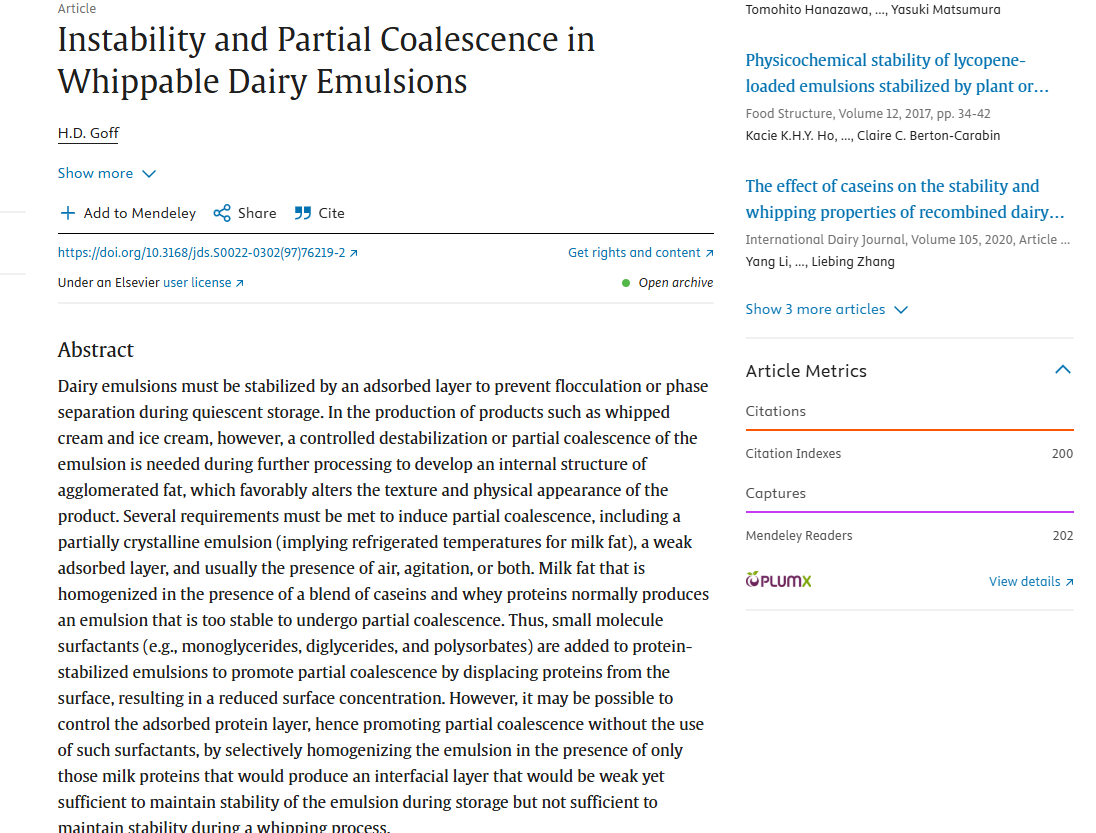
However, this emulsion is not perfectly stable. According to research published in the Journal of Dairy Science, factors such as temperature, fat content, and mechanical treatment can disrupt the emulsion. Once the protective membrane around fat droplets is damaged, fat clusters together and rises to the surface—resulting in separation.
Read More:Instability and Partial Coalescence in Whippable Dairy Emulsions
The phenomenon of cream separation
When cream separates, you may notice:
Visually: Yellow or white fatty clumps on top, with a thin, watery layer (similar to whey) underneath.
Texture: The cream feels greasy or grainy instead of smooth.
In use: It no longer holds shape well, making cake decoration or coffee topping collapse quickly.
Causes of Cream Separation
Several factors commonly lead to cream separating:
Improper temperature
Cream needs to be kept cold (ideally 4–7°C / 39–45°F). Higher temperatures accelerate fat breakdown and clustering.
Low fat content
Cream with less than 30% fat struggles to form a stable foam and tends to split.
Extended storage time
Whipped cream stored for more than 24–48 hours in the fridge gradually loses its structure.
Uneven aeration
If cream is not shaken or mixed evenly before using a cream charger, the gas may distribute unevenly and cause instability.
Repeated charging and releasing
Over-handling can break down the emulsion and collapse the foam.
How to Prevent Cream Separation?
For more stable whipped cream, consider the following tips:
Choose heavy cream or whipping cream with 30–36% fat.
Chill both cream and utensils thoroughly before whipping (around 4°C / 39°F works best).
Shake gently before using whipped cream charger or whipping.
Consume whipped cream within 1–2 days.
Avoid leaving it at room temperature for long periods or recharging repeatedly.
The U.S. Department of Agriculture (USDA) notes that unopened cream can last 1–2 weeks in the fridge, but once whipped, it should be eaten quickly for both taste and food safety.
How to Store Whipped Cream?
Refrigeration: Keep it in an airtight container to prevent absorbing fridge odors.
Short-term: Best used within 24–48 hours.
Freezing: Possible, but texture deteriorates after thawing—unsuitable for decoration.
In a dispenser: Cream charged with nitrous oxide can stay in the refrigerator for 2–3 days. Shake gently before use.
Read More:Why Is My Whipped Cream Coming Out Liquid?
What is Whipped Cream used for?
Beyond being a decorative topping, whipped cream plays several roles in baking and desserts:
Improves texture: Adds lightness and a soft, airy mouthfeel.
Enhances presentation: Perfect for cake piping, coffee art, and overall visual appeal.
Stabilizes structure: Helps set mousses and cheesecakes with a smooth consistency.
Carries flavor: Blends well with vanilla, chocolate, fruit purees, and other flavorings.

✨
Cream separation is a natural outcome of the fat-and-water emulsion breaking down. By choosing the right cream, keeping it cold, handling it properly, and storing it correctly, you can minimize separation and enjoy cream at its best. Mastering these small details not only improves your desserts and drinks but also gives your creations a truly professional finish.

.png?w=800&h=800)