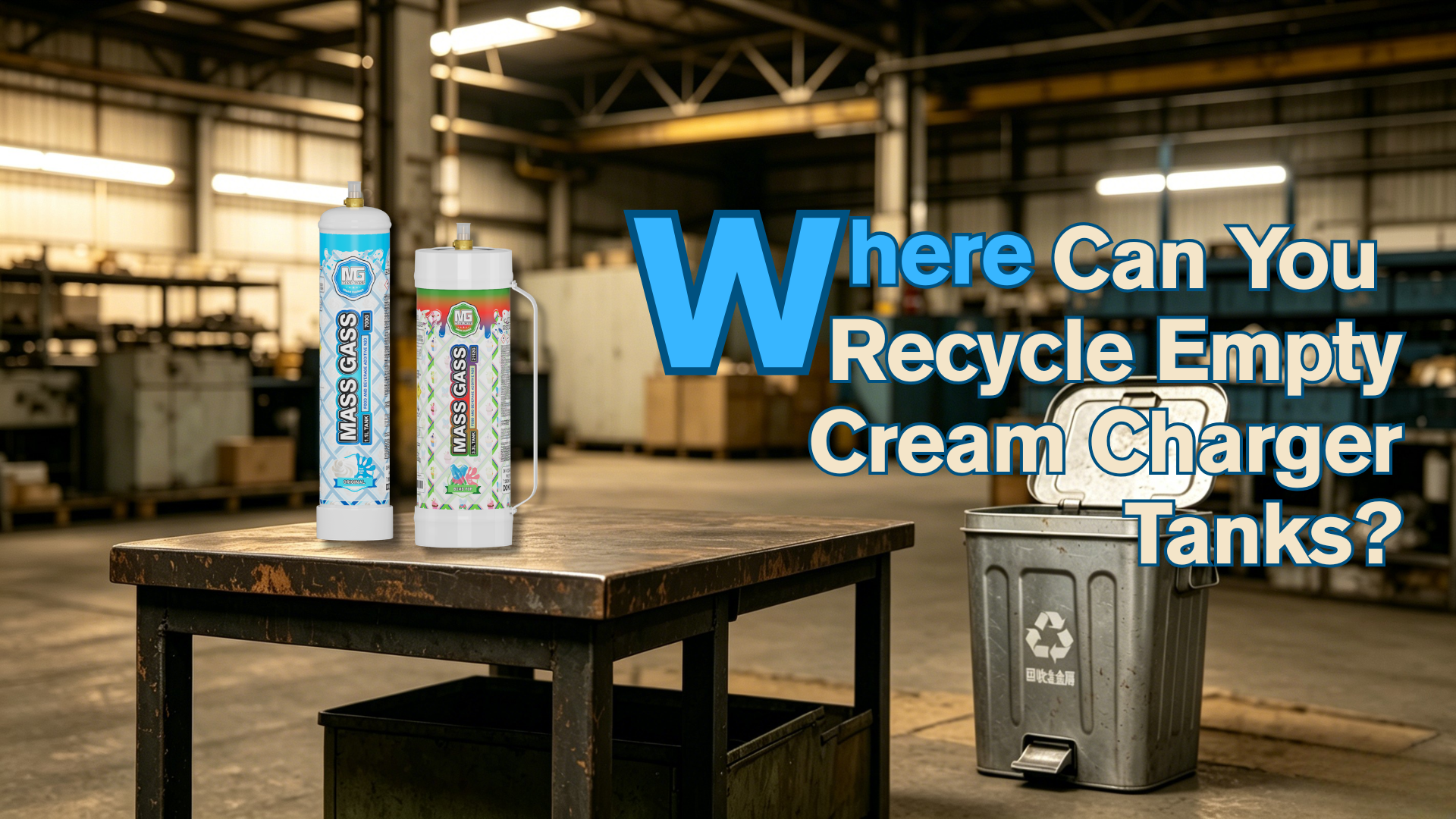

When buying nitrous tanks, the first question most people ask is: “What size should I get?” In fact, different tank sizes each have their own advantages—some are lightweight and convenient, some offer great value, and others are designed for professional kitchens. If you want to avoid mistakes with your next purchase, let’s take a closer look.
What are the common sizes of Nitrous Tanks?
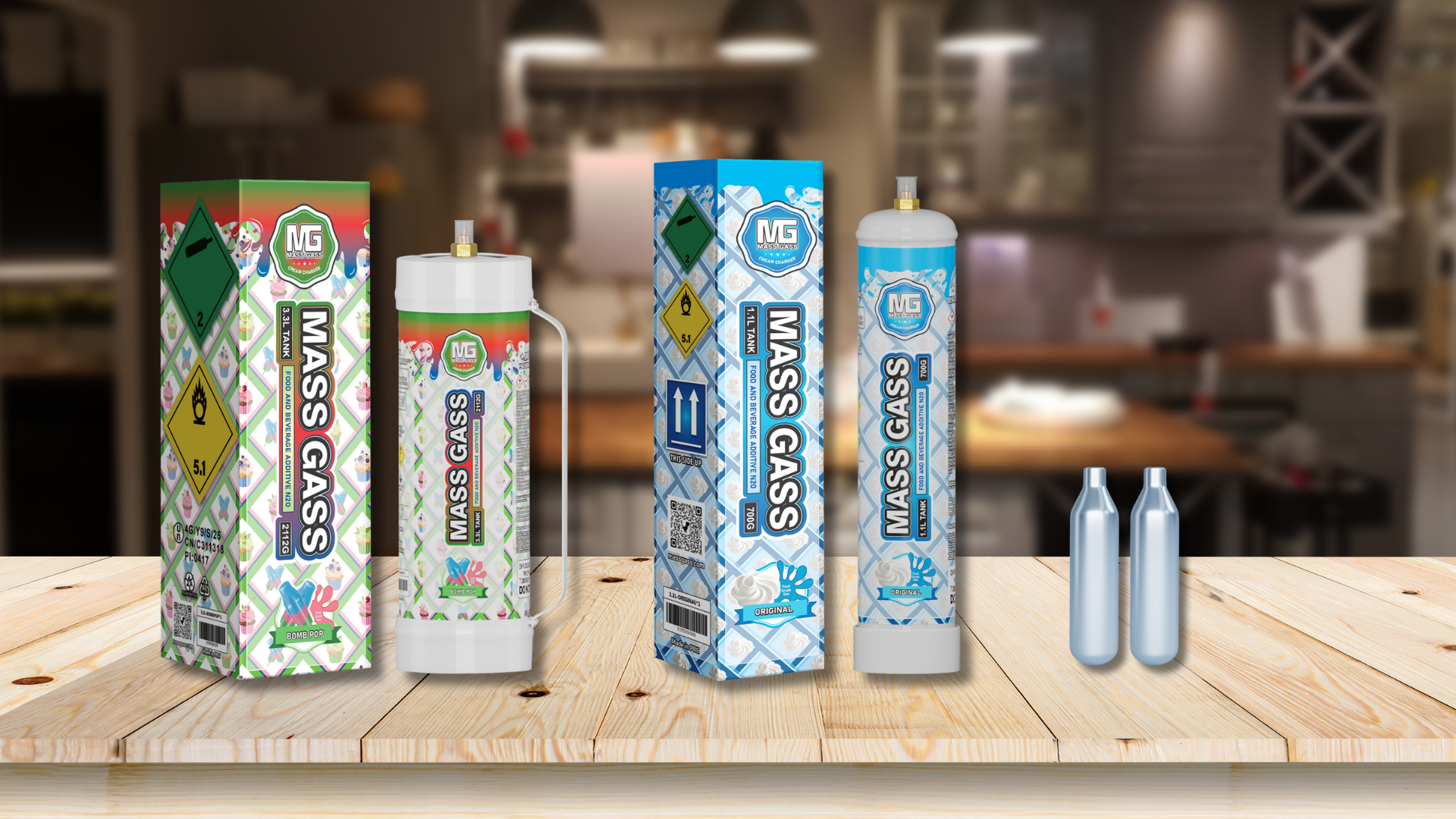
The most popular sizes on the market range from small 8g and 9g cartridges to larger 1.1L and 3.3L tanks, and even 4.5L or higher-capacity professional tanks commonly used in commercial kitchens. Small tanks are compact and beginner-friendly; larger tanks hold more gas and are ideal for frequent or commercial use; and professional tanks are mainly designed for restaurants that need continuous high-volume whipping. If you’re simply a home dessert lover, small cartridges are more than enough. But if you’re a restaurant chef or a dessert maker in a cafe, I strongly recommend going for a larger-capacity tank.
Usage, Advantages & Disadvantages of Different Sizes
8g Cartridges
These are the classic cartridges—small, affordable, and especially suitable for home users or anyone who makes desserts occasionally. They’re easy to use, require no additional equipment, and don’t take up space in the kitchen. However, because the capacity is limited, heavy users will need to replace them frequently, which can be a bit inconvenient.
1.1L or 3.3L Large nitrous oxide Tanks
These large whipped cream tanks are very popular among cafes, bakeries, or frequent users of cream whippers. One tank replaces dozens of small cartridges, making the workflow smoother and more efficient—especially useful in situations where steady output is important. Of course, they require a regulator to operate, and their size and weight are larger, so they need slightly more care when storing or moving.
4.5L Commercial-Grade Tanks
Commonly seen in professional kitchens or beverage shops, these tanks offer high capacity and stable output, allowing long periods of continuous work with excellent efficiency. The downside is also clear: they cost more, require professional equipment, and take up space, making them less suitable for general home users. But if you run a shop with high-volume peak hours, this type is definitely the better choice.

How to Choose the Right Nitrous Tank?
If you only make desserts or whipped drinks occasionally at home, 8g cartridges are perfectly sufficient. If you use them weekly and your consumption is fairly high, a large tank will make everything much smoother and more efficient—and more economical in the long run. If you run a beverage shop, cafe, or bakery, a professional-grade tank will significantly boost your efficiency and better support high-intensity, continuous use. Put simply: low usage → small tanks; frequent usage → large tanks; need stable high output → go for professional tanks.
How to Safely Store Nitrous Tanks?
Whether you choose small or large tanks, store them in a cool, dry place away from direct sunlight, heat sources, and open flames. Avoid leaving them in a hot car all day. Tanks should not be impacted or crushed; large tanks especially need to be placed securely. If you have children at home, make sure the tanks are out of their reach. For large tanks, always use a certified regulator—never attempt DIY modifications to avoid safety risks.

How to Dispose of Empty Tanks?
8g cartridges are considered metal waste and can be discarded according to your local metal recycling rules once emptied. For larger tanks, ensure they are completely depressurized before taking them to a metal recycling center or returning them to your supplier for proper recycling. Do not cut or tamper with the tanks yourself to avoid danger. If there is a proper recycling channel nearby, handing it over to them is the safest and simplest option.
Choosing the right nitrous tank size doesn’t need to be complicated—just consider how often you use it, how much space you have, and whether you need professional equipment. Pick the option that best fits your needs.